Peace-Filled Productivity: A To-Do List You Can Commit To

Feeling overworked and overwhelmed by the laundry list of things you have to do can start to feel depressing when that list never seems to get any smaller.
A mindset flip I’ve learned is to NOT EXPECT your todo list to get smaller.
Think of your todo list as an ever evolving, ever changing master list of your current events. A list for you to revisit, edit, and update.
The way I organize my todo list does not magically change everything. It takes effort and consistency to make lasting change. While everyday I aim to stay committed to the things on my list, I still take breaks to prioritize rest and sometimes I just forget my list entirely.
But the great thing about the way I’ve organized my to-do list is that it’s always there, on any device (and printed out- free print out you can find at the bottom of this blog) and no matter where I fall on the scale of productivity level or how many days I’ve gone without looking at my list AT ALL, I know that when I’m ready to get back on track, my past self organized my to-do list to help me re-focus and start again. That’s comforting.
So if you do nothing else, organize your todo list in this way as your emotional support list to reach for when you need some grounding, guidance, or re-centering. It will surely help you get back on track and feel more in control of your life and your home again.
Having a List Helps Your Brain and Body

When you put everything into a note that you can revisit later, you give your brain a break.
You should not have to hold onto a ton of mental notes and expect to remember them all, all the while you’re completing other tasks. That’s why I wrote about how important it is to focus on What’s Right In Front Of You! (with a free printable included ;))
Besides, with a brain break, your whole nervous system can relax.
Ever had a hard time falling asleep? Having a todo list that works for you can help you feel more peace in the present.
Now how do we reach our goals for more peace and productivity? For a while, I collected notes and tasks without much follow through and that becomes overwhelming. We don’t want that, we want simplicity but we need structure as well.
The organizing tools I use include:
Evernote- My main, first place for storing most of my thoughts, notes, important info, blog drafts, business ideas, and master lists.
Google Tasks- For on-the-go tasks that are simple or need a time stamp, this makes it easy to categorize different buckets of my life. I might be moving a bit more toward Google tasks for the simplicity.
Google Sheets- I keep meal plans, master list of groceries, and annual homemaking tasks to organize, aswell as, long-term blog action plans in google sheets.
Printed + Laminated Charts- My morning and nighttime routine page is printed, along with a weekly loop homemaking schedule, weekly homeschool schedule, and a blank weekly meal plan sheet.
Daily and Weekly Tasks Take up a TON of Real Estate in Your Brain
Without a list or a plan, do you ever think about the things you have to clean, or what you have to do the next day and you start to feel like you have to do everything RIGHT THIS MOMENT?
I get it!
STEP 1: Create Reoccurring Lists / Loop Schedules
You need to start with lists that are reoccurring: daily, weekly, even monthly, for example.
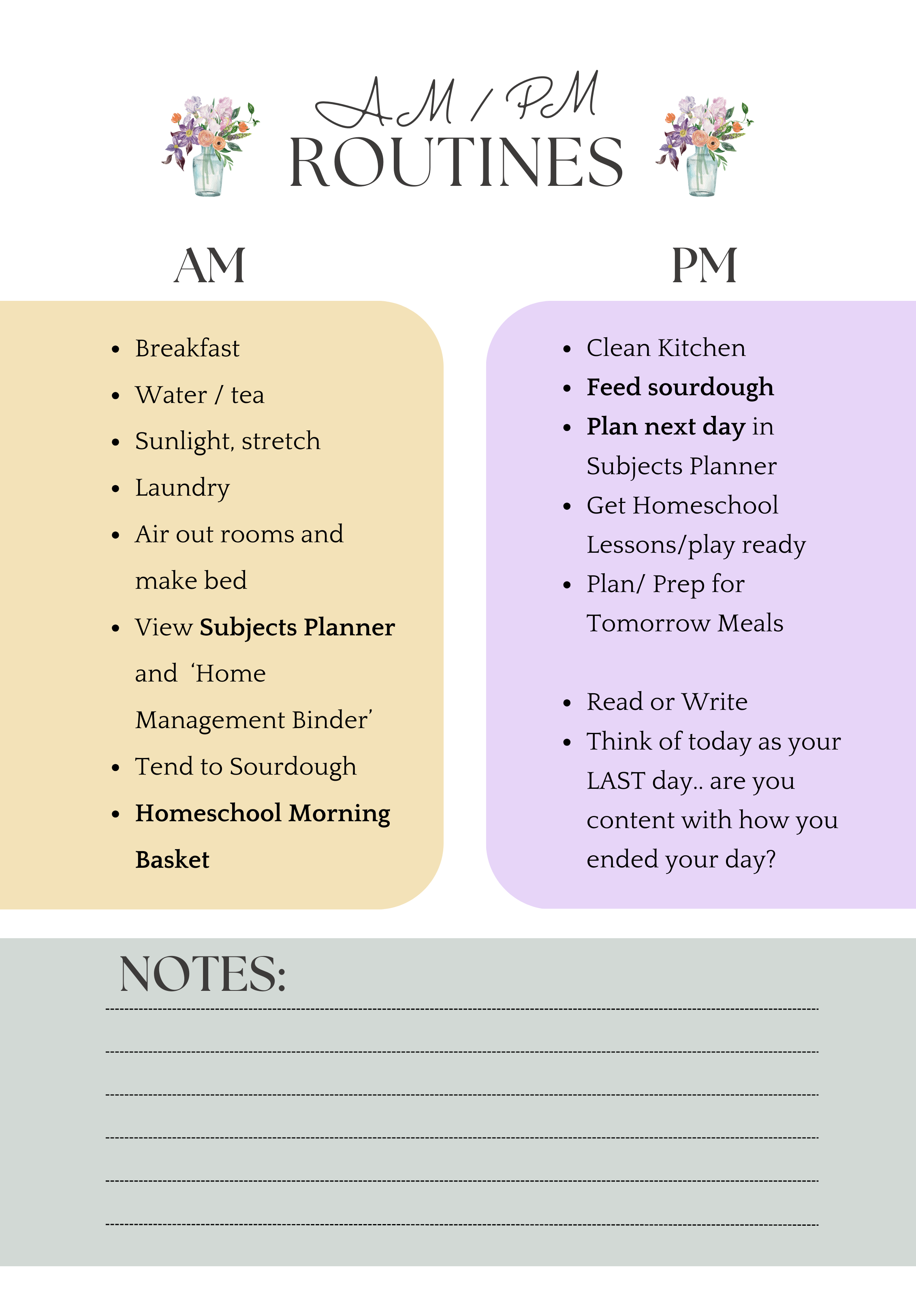
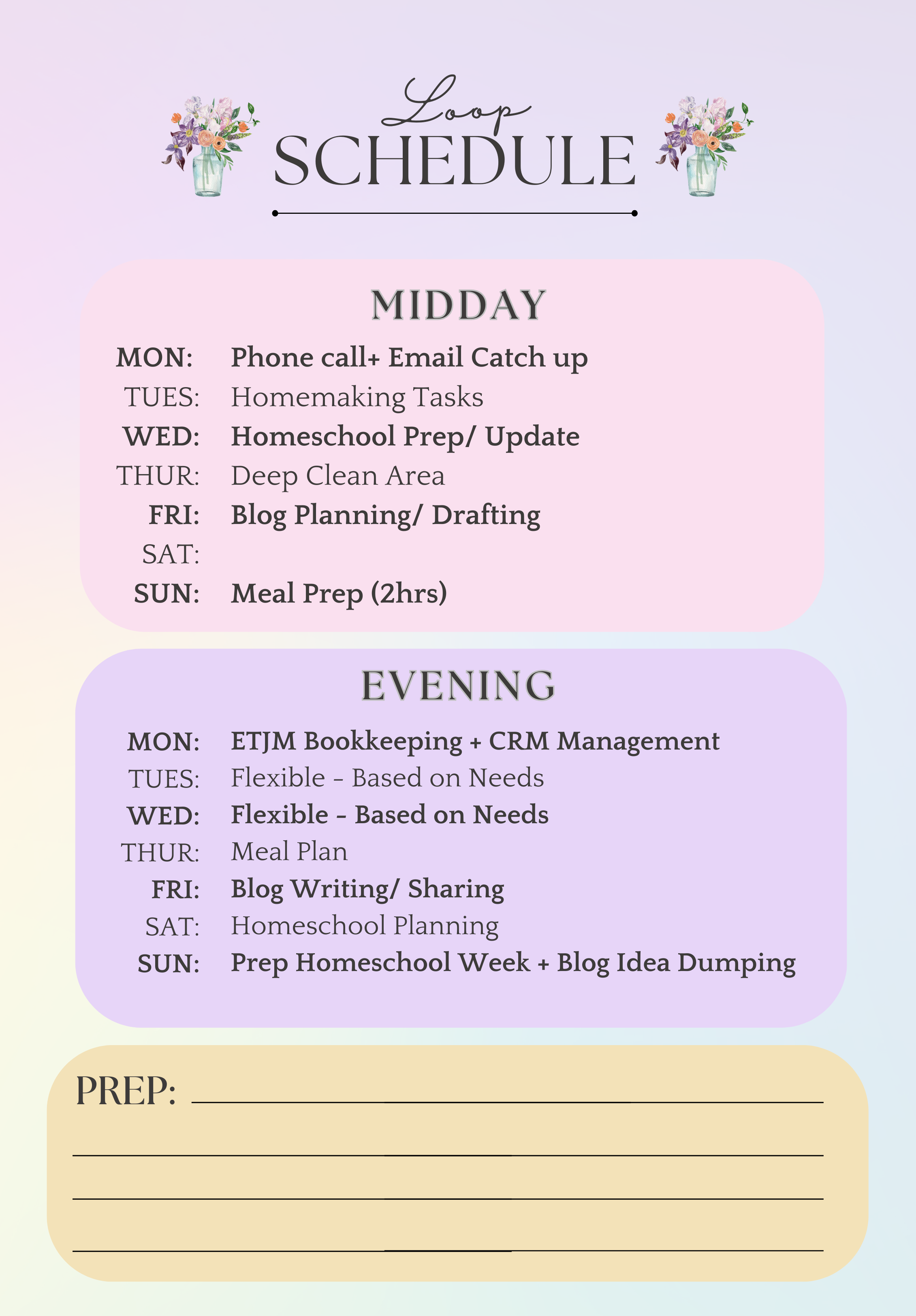
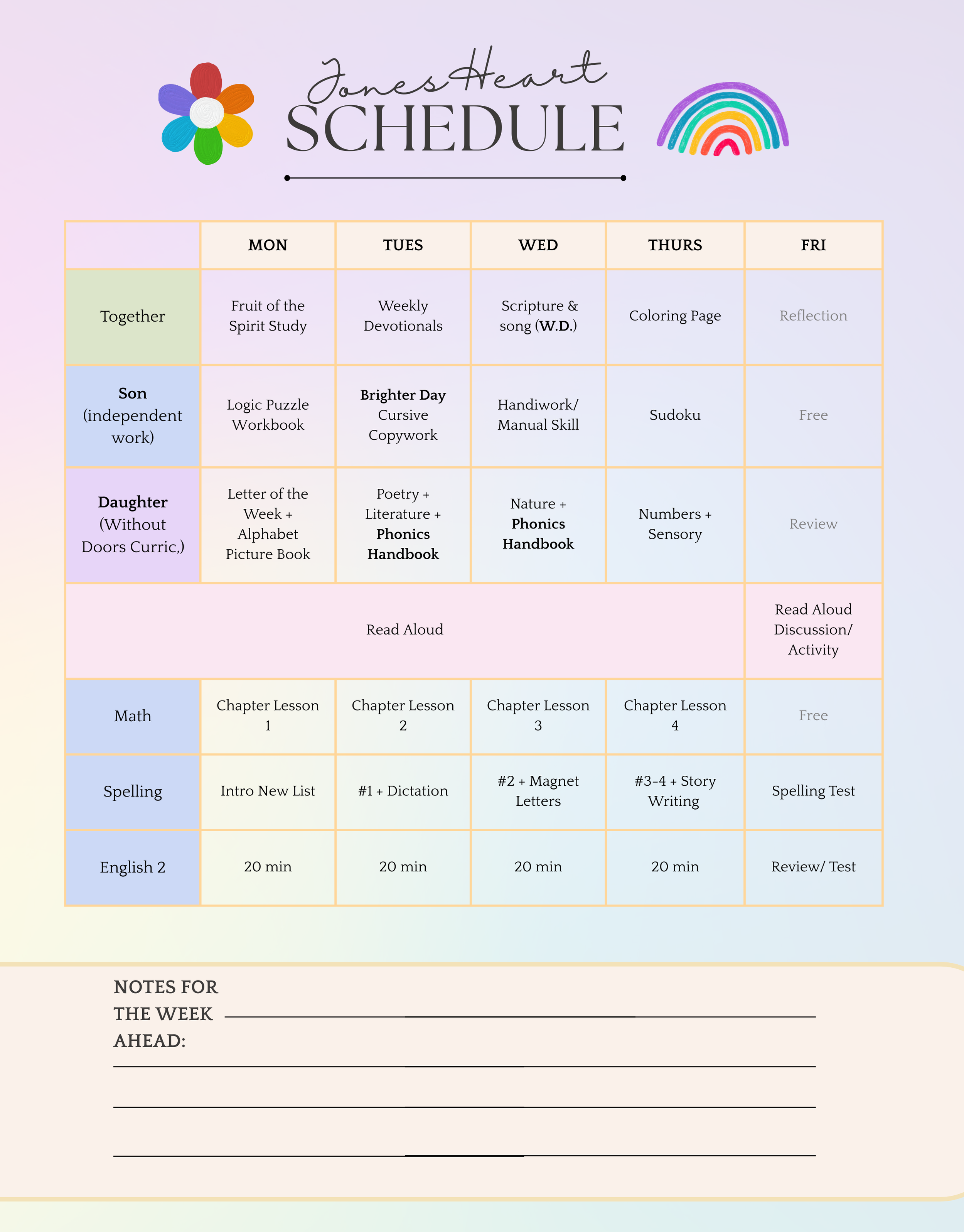
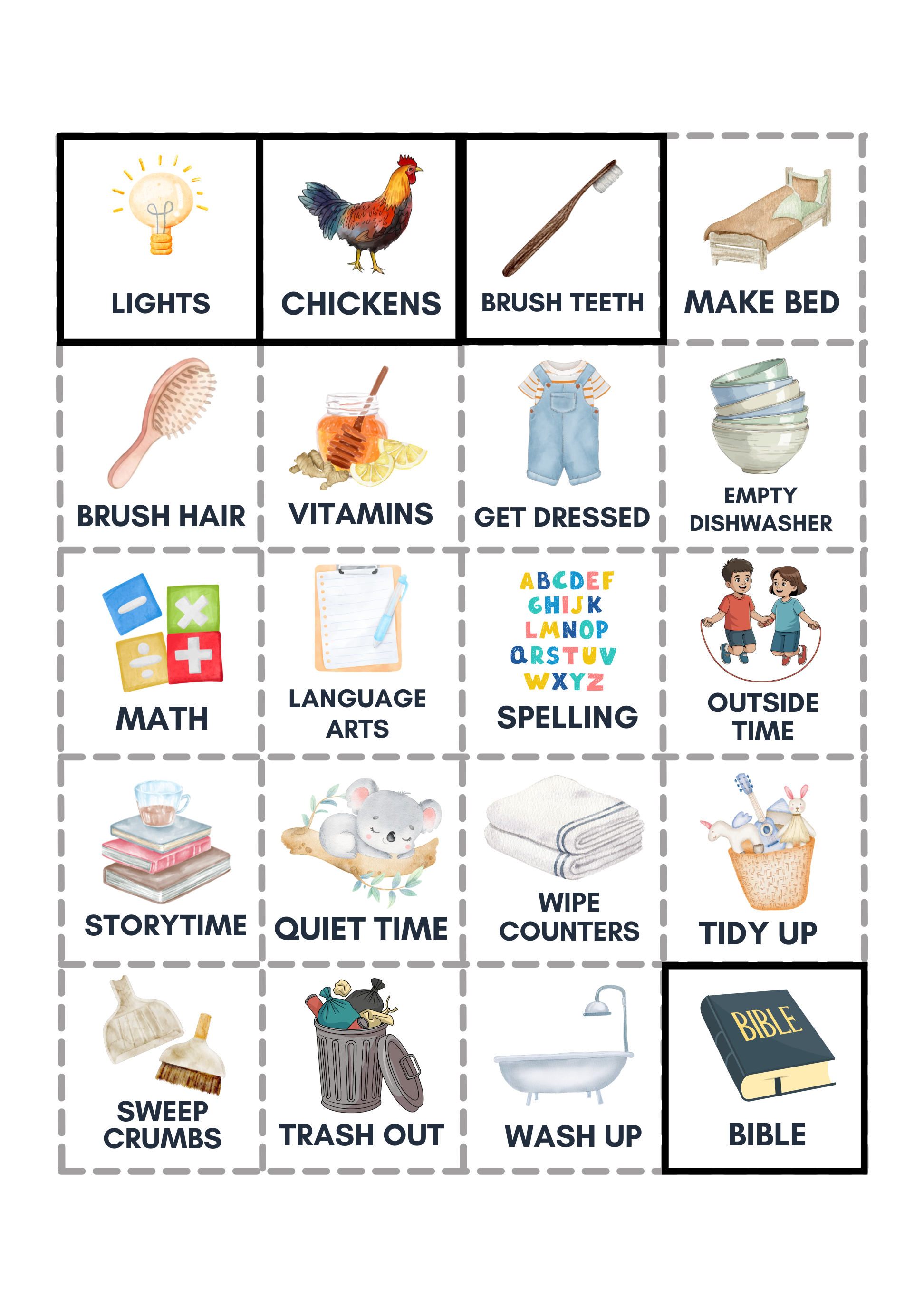
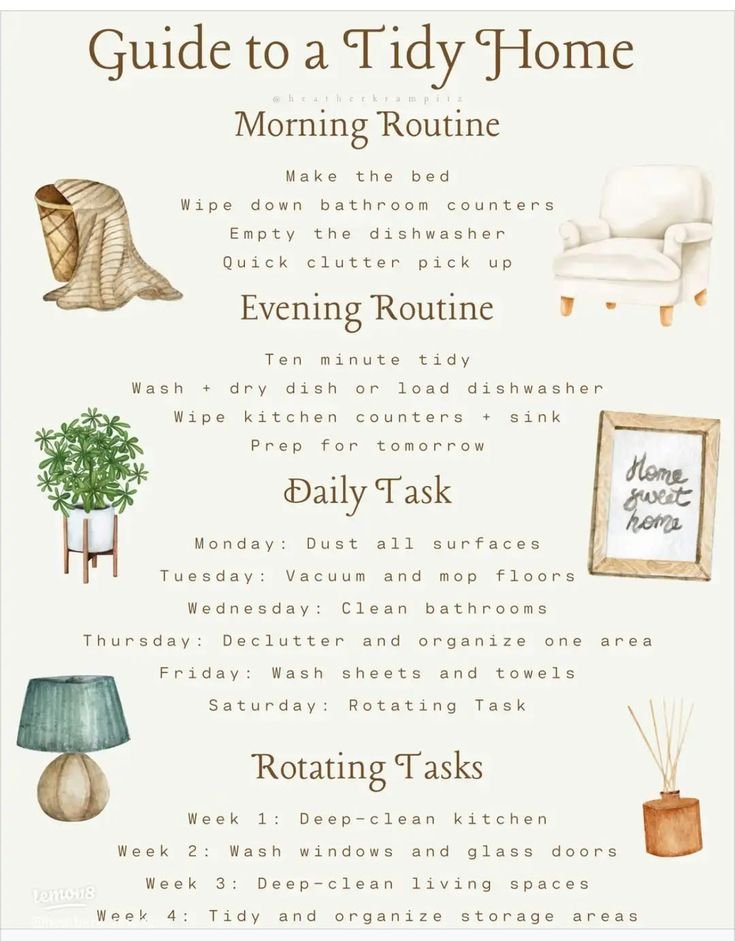
Here are some of my examples of my own:
My AM/PM Routine
My Weekly Loop Schedule
The Kid’s Homeschool Schedule
Kid’s Visual Daily Chart
A Daily + Weekly Cleaning List (Found on Pinterest)
The great thing about reoccurring lists is, they’ll always be there to help you get back on track and you can thank your past self for setting them up!
Take your time organizing and realizing what are your Must-Dos and Want-to-dos!
LESS IS MORE.
Don’t over commit when creating your lists or you’ll feel shame and overwhelm when having to face your list each day/week.
Start creating your daily list first, then your weekly list, then monthly.. and so on.
For Monthly things that reoccur on a specific date or time, I’ve been using Google Tasks.
STEP 2: Manage One-Time Tasks and To-Dos
Now that you have something to rely on, your lists to visit each day, you should begin to feel more at peace.
You don’t have to hold each task in your brain but simply view your list and decide what you can or cannot do in that moment. No thinking, just doing.
Now comes the evolving, ever changing area of your life. Things come up, things change, etc.
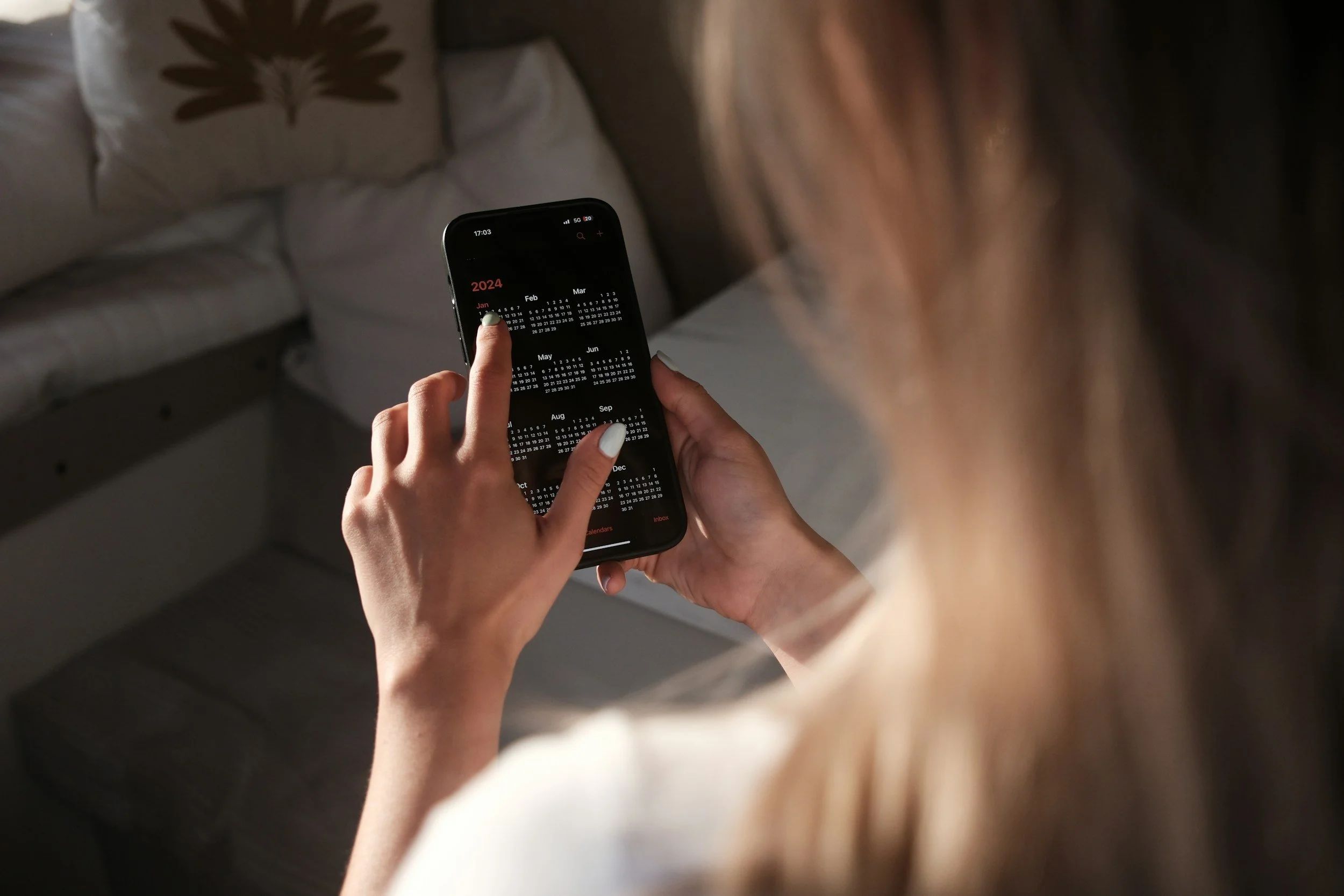
I’ve enjoyed using Google Tasks for simplicity.
Whatever comes up that is a must do, throw it in your Google Tasks. The only thing I wish it had is a High/Medium/Low Priority indicator.
But with Google Tasks you can:
Quickly create tasks on your phone or desktop
Add a deadline
Add subtasks
Star tasks or whole lists
Create separate lists for separate parts of your life
View your tasks on your Google Calendar
STEP 3: Focus On 3 Main Tasks
With the help of your Daily Routines and Loop Schedules, you should always aim to plan your day the night or day before.
This gives your brain and body a more peaceful start to the day. If your brain is having to decide what to do everyday just in that moment, it’s going to fatigue— decision fatigue is real!
The night before, you should go through your digital task/ todo list and mark three items to be your focuses for the next day. I have a Google Task dropdown that is titled “Tomorrow” and each night I’ll move a few things to that list. That’s it.
This is where you can even use a physical planner to plan your “tomorrows”.
By giving your brain as few decisions to make as possible, you are starting your day with less stress.
Trust Yourself
Ultimately, if your tasks are beneficial to you, your home, and your relationships, and you’ve got them written right in front of you as your focus for the day, don’t make it harder on yourself by muddling up the things YOU THINK you have to do.
Just focus on the things you’ve given yourself and you’ll see you start to feel better and more productivity day by day. It’s the little things and the small changes over time that impact our life.
Resources
The two books that have helped my productivity are Essentialism: The Disciplined Pursuit of Less by David McKeown, and Organize Tomorrow Today by Dr.Jason Selk and Tom Bartow.